Once Upon a Time in the West (e)
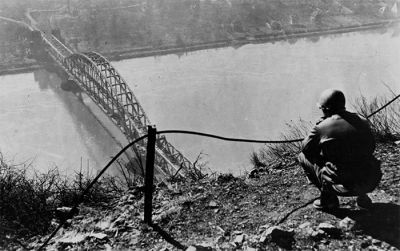
Photo: IMAGO / Leemage
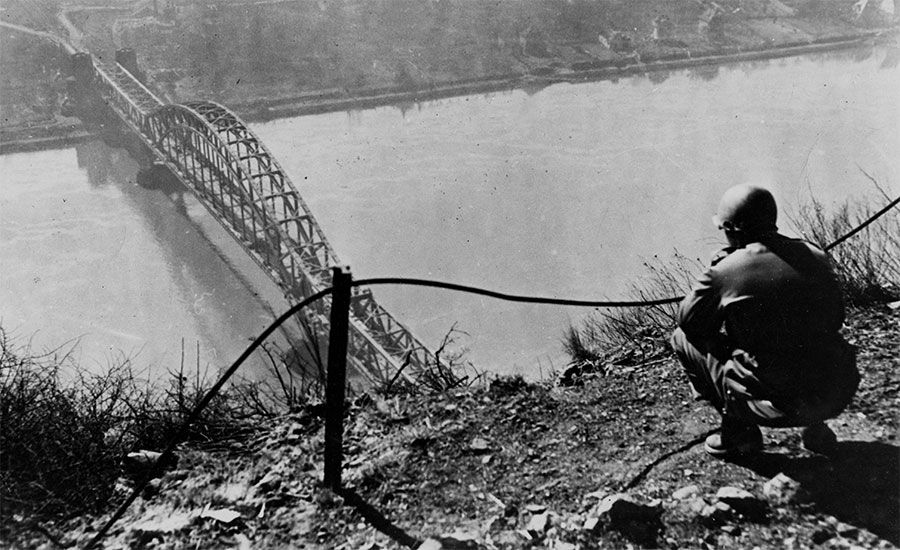
Seventy years ago, with the unexpected capture of the nearly undamaged Rhine Bridge at Remagen, the Americans succeeded in crossing the river and thus advancing into the heart of Germany, well ahead of schedule. Although the bridge collapsed on March 17, the strategic situation remained under control, and two months later, the terror was a thing of the past. The bridge had served its purpose and was never rebuilt.
With the end of the aggression came an opportunity for communication. And the Americans had prepared for this moment conscientiously, respectfully, and with foresight. This is documented in the “Pocket Guide to Germany,” which every GI carried with him at the time.
A compendium combining a field manual, a vocabulary booklet, and an instruction manual for occupied Germany. It includes strict rules of conduct, geographical and cultural explanations, and a few helpful phrases for conversation. A small format for a grand mission, with an overall tone that is unusually moderate. Looking back, we can safely assume that our American friends really were the good guys. It even comes with an errata sheet for the exotic umlauts. Politically and orthographically, everything is correct.
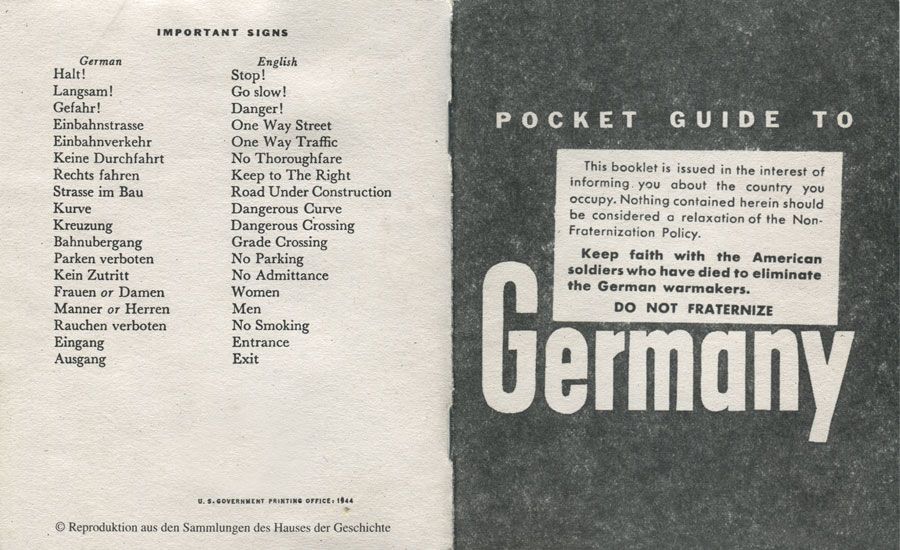
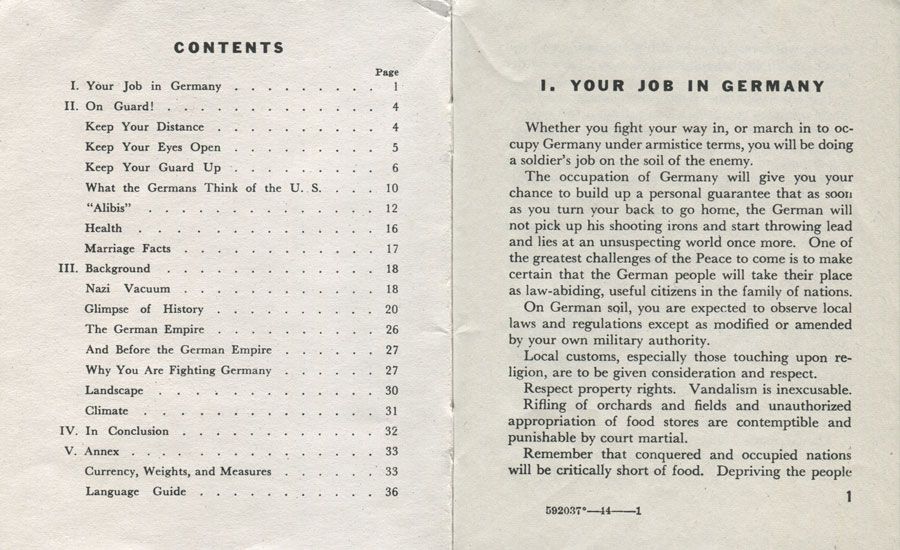
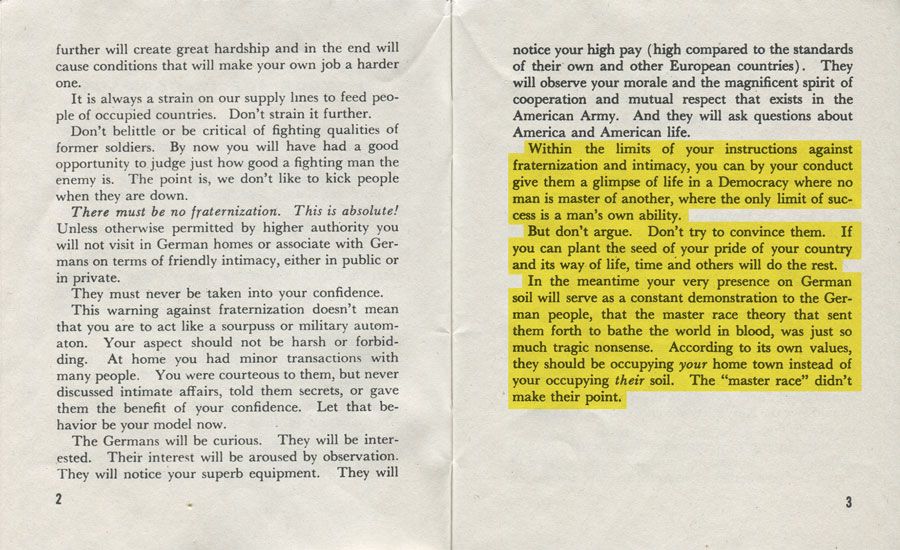
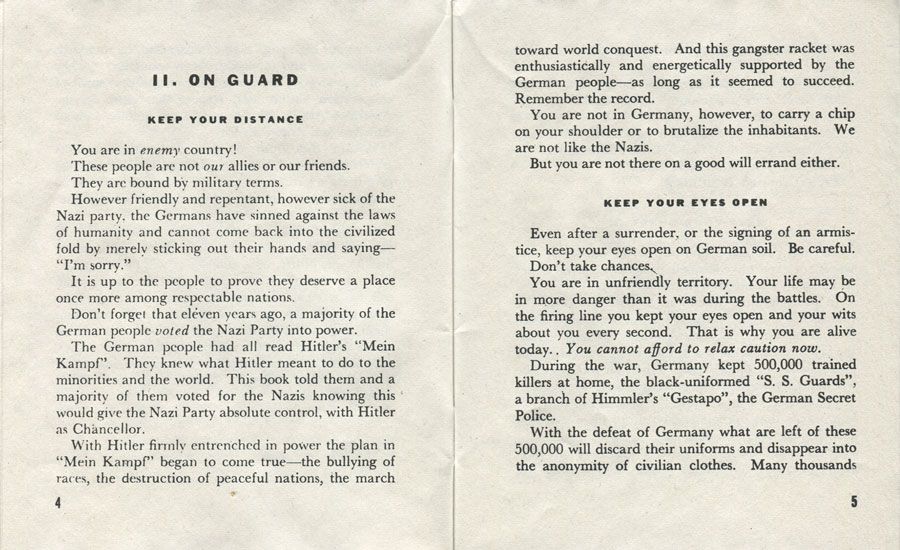
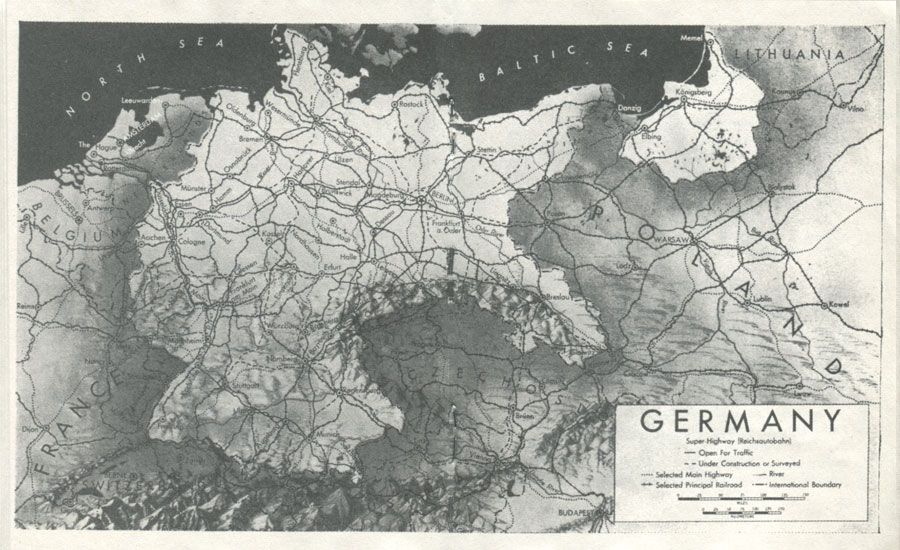
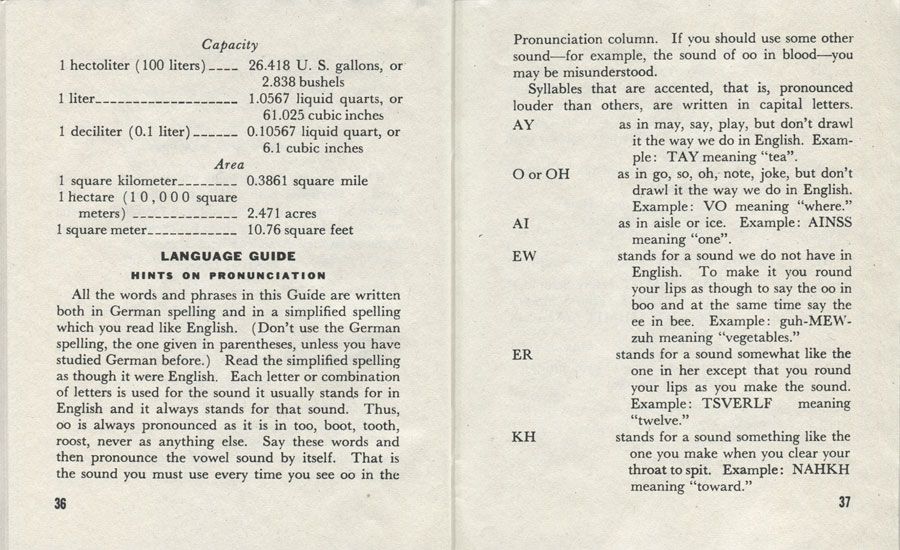
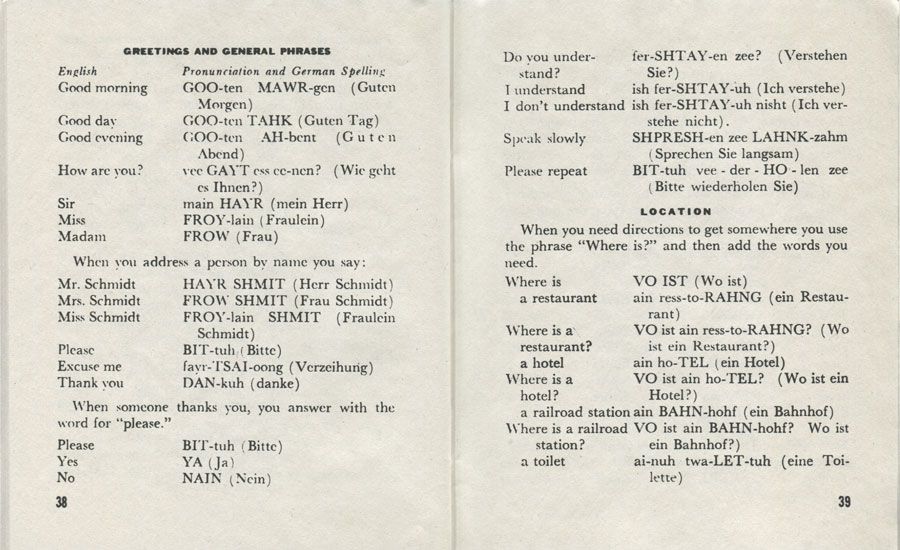
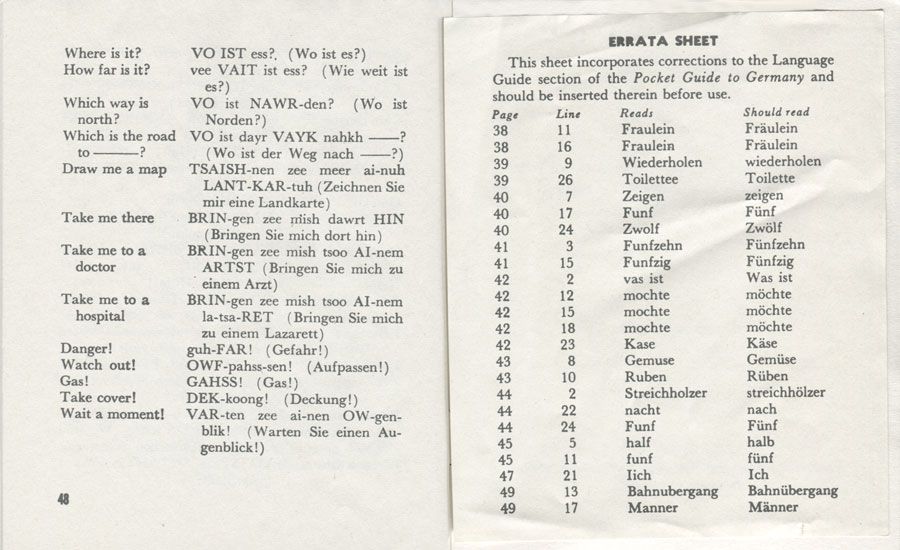
Excerpts from the reprint (see note on page 3) Link to the original edition
They say communication is everything, but how do you reach out to a people who are ideologically completely unpredictable? In a country that – including ethically – has burned all its bridges? The United States, as a world power, sometimes thinks and acts with dangerous naivety when it comes to contemporary history; the Pocket Guide, by contrast, offers astute analysis and reasoning. It is part of a peace-building strategy that would eventually become the defining sociopolitical campaign in postwar Europe, culminating in our “economic miracle.”
Many proud myths surround the reconstruction of West Germany, but the so-called miracles are the fortunate result of a rock-solid strategic effort by predominantly American political and economic experts. PR and advertising specialists were also occasionally at the table. The communicative approach is impressive and anything but a given. The U.S. did indeed take democracy very seriously at one point.
On the other hand, the rapid military success was not necessarily something anyone could have anticipated. For the period starting in July, once the atomic bomb was completed, there were entirely different plans in the works. Reading the *Pocket Guide to Germany* would have been unnecessary after that.
P.S.: Since 1980, the remains of the bridge piers on the left bank of the Rhine have been converted into the Peace Museum. It features German and American flags. – Here’s a peaceful aerial video …
Trailer for the WDR documentary “The Bridge at Remagen” – Uploaded by: airpicture24, Cologne
P.S.: More blog posts on German-American relations:



2017 Das moralische Gesetz in uns (in German only)
2021 Good Morning America! (in German only)
2024 Lee Miller, Photographer, 1907-1977 (English Trasnlation)